
While the EU prepares for a new wave of financial regulation, Ukraine is simultaneously developing open banking, instant payments, and bringing its fintech market closer to European standards.
How ready are banks for Open Banking, can account-to-account payments compete with cards, and what changes await the financial sector in the next five years — we discussed this with the Deputy Head of the National Bank of Ukraine, Oleksiy Shaban.

Deputy Head of the National Bank of Ukraine Oleksiy Shaban
What is the current real status of open banking implementation, and how quickly is the financial market ready for the full implementation of Open Banking and the API standard?
Let’s start with the fact that comprehensive open banking regulation was introduced in 2025. The National Bank adopted a series of regulatory acts, and banks and other market participants developed standards and specifications for open APIs. This was done for accounts of individuals and sole proprietors. Specifications for legal entity accounts are currently being finalized.
As of today, three banks — PUMB, PrivatBank, and Ukrsibbank — have received authorization from the National Bank to provide non-financial payment services: account information services and payment initiation services. The National Bank has also approved the terms and procedures for providing services within the framework of open banking to two technological operators — the Ukrainian Processing Center and TAS LINK. This indicates that the market is technologically ready for the practical implementation of open banking.
We already have information about the first transactions within open banking.
The specifications were developed by payment market participants almost a year ago. Accordingly, this allowed market participants to immediately consider the approaches laid down in these specifications and gradually adjust their own information systems.
We believe that by August-September, practically the entire banking system will be ready to open its APIs. This is already a topic for 2026.
Does the National Bank see risks of losing control over customer data?
The construction of the open banking ecosystem is based on clear security principles.
User (customer) data is stored by banks and payment service providers that service accounts. At the same time, non-financial payment service providers (providers of account information services, providers of payment transaction initiation services) operate within the ecosystem. All established requirements are aimed at secure information exchange.
Access to account information and initiation of payment transactions are possible only at the initiative and with the consent of the user. Such consent is provided by the user to the account-servicing payment service provider in favor of a specific non-financial payment service provider that is authorized by the National Bank, is included in the National Bank’s payment infrastructure registry, and has obtained relevant certificates.
When a non-financial payment service provider sends a request to obtain account information or initiate a payment transaction, the bank verifies its data in the certificate and the National Bank’s payment infrastructure registry. This guarantees that only an authorized payment market participant gains access.
The user can revoke previously granted consent at any time. Furthermore, information exchange occurs taking into account the security requirements established by law, which further enhances the system’s security.
Read also: Rada supports extending the 50% tax for banks
Does open banking risk losing its main advantage due to the large number of regulatory and security requirements?
We do not think so. We did not try to invent our own approach. All requirements for secure information exchange in open banking, defined by Ukrainian legislation and regulatory acts of the National Bank, effectively implement the norms of the European Union and take into account the practice of their application. The open banking specifications in Ukraine are based on the Berlin Group specifications.
During the preparation of the regulatory framework, we consulted with market participants for several years and considered the capabilities of Ukrainian banks and other account-servicing payment service providers.
These regulations are aimed not at hindering development, but at ensuring security and increasing trust both among market participants and from users. That is why we do not believe they are holding back the development of open banking.
Can instant payments realistically compete with card systems in our country?
Let’s start with global experience. According to the ACI Worldwide Report “Real-Time Payments: Economic Impact and Financial Inclusion,” instant payments, which are executed from account to account in seconds, have become an integral part of the payment infrastructure in many countries. In 2023, their use in 40 countries worldwide provided a cumulative increase in global GDP of $160 billion.
Looking at Europe, there have long been successful systems based on instant transfers between accounts. They are popular among citizens and businesses and successfully compete with card systems. Examples include the Polish system BLIK and the Spanish Bizum.
In the case of BLIK, about 70% of e-commerce transactions in Poland, by number of transactions, are accounted for by this system. In total, BLIK handles over half of the volume of e-commerce payments in the country.
For our part, based on the National Bank’s electronic payment system (SEP), we created the capability to perform interbank instant credit transfers in December 2024. We are now working to make them as convenient and competitive as possible.
Our role is to create infrastructure for alternative payment methods that banks and non-bank payment institutions can develop.
We see prospects in creating an open ecosystem of instant payments, which will allow merchants to accept payments without using card systems — with instant crediting of funds, transaction confirmation, and transfer of details via QR codes or other standardized tools.
The goal is to form a unified approach for all banks and non-bank payment service providers and ensure a consistent user experience. Therefore, we believe that instant payments can become a full-fledged competitor to card systems.
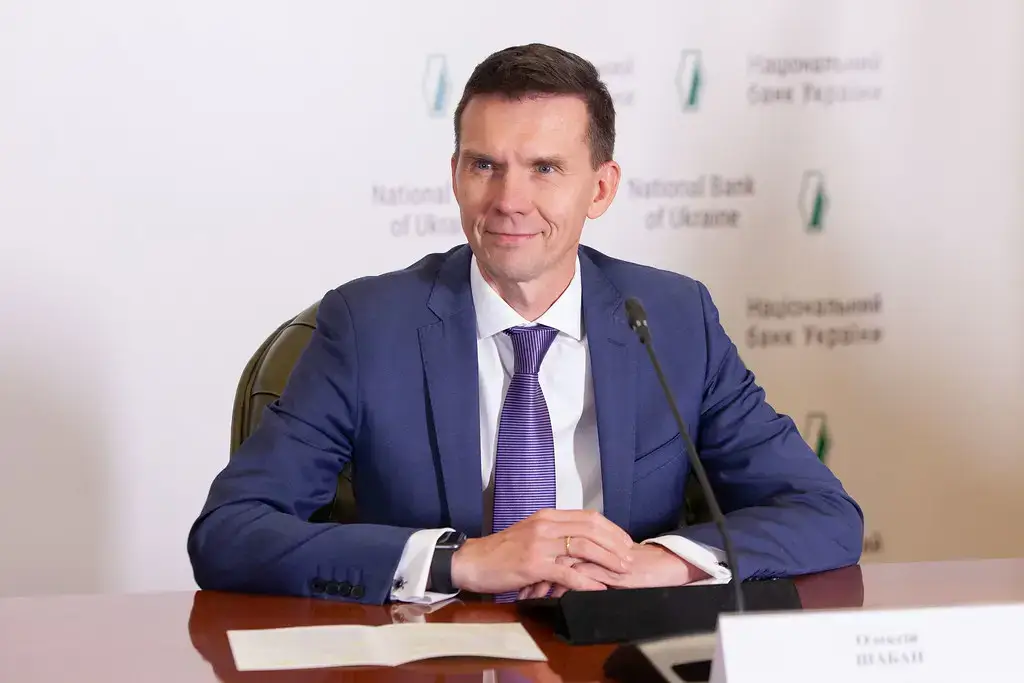
Deputy Head of the National Bank of Ukraine Oleksiy Shaban
Are all Ukrainian banks ready to become primary providers of instant payments, or is a part of the market not yet ready?
All market participants must learn to perform instant credit transfers. At the same time, Ukrainian banks have been carrying out ordinary account-to-account transfers for a long time.
We understand that there are banks that hardly work with individuals. For them, implementation may proceed more slowly, but this will not significantly affect the overall speed of instant transfer development in Ukraine.
Competition also plays an important role. If customers see more convenient services in another bank, it stimulates faster adoption of new solutions.
Moreover, the cost of instant account-to-account transfers is significantly lower than the cost of payments in traditional card systems.
What barriers do you see to the implementation of instant payments?
Looking at the experience of European countries, the popularity of instant transfers grew gradually. First, it was person-to-person (P2P) transfers, then businesses joined, and in the third stage — retail and e-commerce.
I do not see any serious barriers, except for user habits. In e-commerce, I also do not see significant obstacles. The example of Poland and BLIK shows that such systems can successfully compete with card payment methods.
Incentives for users can play an important role. If a certain payment method offers additional bonuses or advantages, a portion of customers will more readily choose it.
Also read: National Bank adopts rules for launching financial inclusion banks
In your opinion, are instant payments safer for the user than traditional card payments?
A complex question. It is difficult to give a definitive answer, as statistics usually show which payment method is safer. Currently, the volume of instant payments in Ukraine is not yet sufficient for such comparisons.
Card systems, which Ukrainian banks work with, have been developing for many years. During this time, significant resources have been invested in creating protection mechanisms and preventing fraud.
For instant transfers to also remain secure, banks need to implement and develop scoring systems to assess the risks of such operations. Therefore, it is currently impossible to definitively say which payment method is safer.
At the same time, fraudsters are constantly improving their methods. That is why fraud protection systems — both for card payments and for account-to-account transfers — must continuously evolve.
Is Ukraine lagging behind EU countries in terms of fintech regulation? And perhaps you see some innovations that you would like to adopt from colleagues?
We are in a phase of “chasing a moving target,” as European regulation does not stand still. For us, this is a natural benchmark, as Euro-integration remains Ukraine’s strategic goal.
Based on the screening of the compliance of Ukrainian banking legislation with European legislation, the level of compliance has increased from just over 50% to 78% over the past four years.
At the same time, the EU continues to update its regulatory framework. The entry into force of the third payment directive and the PSR regulation is expected in the very near future, which means a new stage of implementation for Ukraine.
There is also a significant amount of work ahead in implementing MiCA requirements for virtual assets, DORA for digital operational resilience, and GDPR for personal data protection.
A separate area is the regulation of artificial intelligence. The EU already has the AI Act in force, and the issue of responsible use of AI in the financial sector is gradually becoming one of the key ones.
One often hears concerns that synchronization with European rules will slow down fintech development. We do not think so. On the contrary, harmonization of legislation will create additional opportunities for Ukrainian companies planning to enter the European market.
The closer Ukrainian rules are to European ones, the easier it will be for Ukrainian financial institutions to operate in the EU after Ukraine joins the European Union.
How do you envision the Ukrainian financial market in approximately five years?
I think that in five years, the Ukrainian financial market will be almost completely digitized.
At the same time, it must remain resilient. In recent years, the Ukrainian financial system has been operating under conditions of war, cyberattacks, and threats to energy infrastructure. The fact that it continues to function uninterruptedly testifies to the effectiveness of the solutions implemented over the last decade.
Another important characteristic of the future market is deep integration with the European financial space. This refers not only to joining SEPA but also to full compatibility with European standards and payment infrastructure.
We also expect further growth in the share of instant account-to-account transfers. Open banking development will largely contribute to this.
The next stage after Open Banking should be Open Finance — a model in which the exchange of data and financial services goes far beyond payment accounts. In parallel, the integration of EU standards, including DORA, MiCA, and data protection approaches based on GDPR, will continue.
The fintech ecosystem of the future will be banks, non-bank financial institutions, and technology companies operating in a common regulatory environment without regulatory arbitrage between segments.
Solutions based on artificial intelligence and a data-driven approach will play a separate role. Such systems are already used today for risk assessment, fraud detection, and personalization of financial products, and their importance will only grow.
At the same time, consumer protection will remain a key priority — both in terms of the security of funds, and regarding data confidentiality and transparency of automated decisions.
Overall, the financial ecosystem will move towards a model of regulated innovation, where technological development is combined with effective risk management, data protection, and compatibility with European rules.
See other popular materials:
A comprehensive service for military personnel and their families launched in Diia
How much Ukrainians paid in taxes in 2026 — overview
Scientists created aviation fuel from plastic waste